Asbestos and older Bristol homes: what to check before a kitchen renovation
By Farah Moreau · Updated 2026-08-27
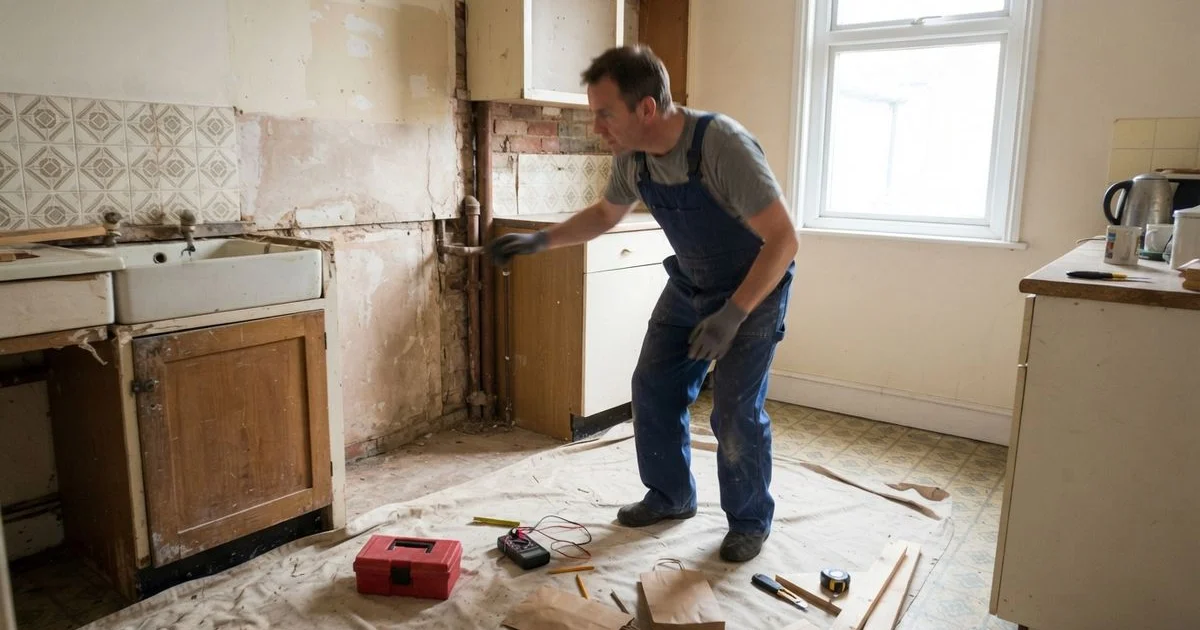
This is general safety information, not medical or professional advice: if you suspect asbestos in your property, the safe approach is to leave the material undisturbed and get it assessed by a qualified professional, rather than relying on this guide to identify or handle it yourself.
A meaningful share of Bristol’s housing, Victorian terraces, Georgian conversions, and plenty of mid-century properties too, was built or last substantially renovated before asbestos was banned in UK construction in 1999. That doesn’t mean every older kitchen renovation involves asbestos, but it’s common enough in this age of property that it’s worth checking for deliberately rather than assuming it isn’t there.
Where asbestos commonly turns up in a kitchen
- Old floor tiles and the adhesive beneath them, particularly vinyl or thermoplastic tiles from before the 2000s
- Textured ceiling coatings, sometimes still present under later paint layers
- Older cladding, panelling, or infill panels in some kitchen fit-outs from this era
- Pipe lagging or insulation, occasionally found around older pipework being disturbed during a renovation
None of these are identifiable just by looking. Asbestos-containing materials generally look like any other material of the same type, which is exactly why testing rather than guessing matters.
| Material | Where it might appear | Risk if disturbed |
|---|---|---|
| Vinyl or thermoplastic floor tiles (pre-2000s) | Original kitchen flooring | Fibres released if cut, sanded or forcefully removed |
| Textured ceiling coating | Kitchen ceiling, sometimes painted over | Fibres released if sanded, drilled or scraped |
| Older wall panelling or cladding | Some period kitchen fit-outs | Fibres released if cut or broken |
| Pipe lagging | Around older pipework | Fibres released if disturbed or removed carelessly |
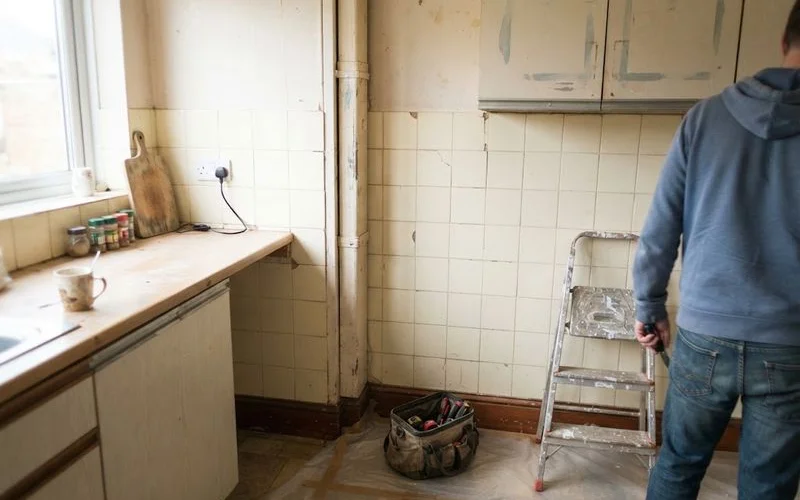
Why the risk is about disturbance, not presence
Asbestos-containing material that’s intact and undisturbed generally poses low risk. The danger comes from fibres becoming airborne when material is cut, sanded, drilled, or broken, exactly the kind of disturbance a kitchen renovation involves if old flooring or wall surfaces are being ripped out. This is why the standard advice for suspected asbestos is to leave it undisturbed rather than attempt to remove or work around it yourself.
What to do if you suspect asbestos
If your property was built or last substantially fitted out before 2000 and you’re planning to strip out old flooring, ceiling coatings, or wall panels, it’s worth having the relevant materials tested before work starts. A licensed asbestos surveyor can identify whether a material contains asbestos and, if so, arrange safe removal by a licensed contractor. This isn’t a step to skip to save time or cost, since improperly disturbed asbestos is a genuine health risk that’s entirely avoidable with proper testing and removal.
What a survey and safe removal actually involves
A licensed asbestos surveyor typically takes small samples of the suspected material and sends them for laboratory analysis, which usually takes a few days to come back. If asbestos is confirmed, removal should be carried out by a licensed asbestos removal contractor, working to strict controls around containment and disposal, rather than a general kitchen fitter, even an experienced one. This adds time and cost to a renovation, but it’s a fixed, one-off step rather than an ongoing concern once it’s dealt with properly.
Budgeting for the possibility
If your property is in the age bracket where asbestos is plausible, it’s worth building the possibility of testing and removal into your renovation contingency from the outset, rather than treating it as an unplanned extra if it comes up. Ask your fitter or contractor whether they’ve factored this into their quote or timeline, particularly if you know the property hasn’t been substantially renovated since it was built.
Working with your fitter on this
Tell your fitter upfront if your property falls into the pre-2000 window, since an experienced fitter working across Bristol’s older housing stock will likely have handled this before and can advise on next steps, or pause work and recommend testing if something suspicious turns up during strip-out. Older properties often raise other safety questions worth asking about too, particularly around electrical and gas safety if wiring or gas pipework is being disturbed at the same time. A fitter who takes this seriously, rather than brushing past it to keep the job moving, is the one worth trusting with an older property.
Browse the Bristol kitchen fitters directory to compare firms experienced with older properties, and see our scoring methodology for how listed businesses are ranked.
FAQ
- Which properties are more likely to have asbestos?
- Properties built or renovated before 2000 are more likely to contain asbestos materials somewhere in the building, since it was widely used in construction until it was banned in the UK in 1999. Many of Bristol's Victorian, Georgian and mid-century properties fall into this window.
- Where might asbestos be found in a kitchen?
- Common locations include old floor tiles and their adhesive, textured coatings on ceilings, some older cladding or panelling, and occasionally insulation around pipework. It's not visible to the naked eye in a way that lets you identify it just by looking.
- Is it safe to remove old kitchen flooring or panels myself if I suspect asbestos?
- No. Disturbing suspected asbestos material yourself is not recommended, since the risk comes from disturbed fibres becoming airborne. If you suspect a material might contain asbestos, leave it undisturbed and get it tested or removed by a qualified professional.
- Is this medical advice about asbestos exposure risk?
- No, this is general information about what to check for and how to proceed safely during a renovation. For any health concerns related to asbestos exposure, consult a medical professional and the relevant health and safety guidance directly.