Electrical and gas safety when fitting a new kitchen
By Farah Moreau · Updated 2026-08-25
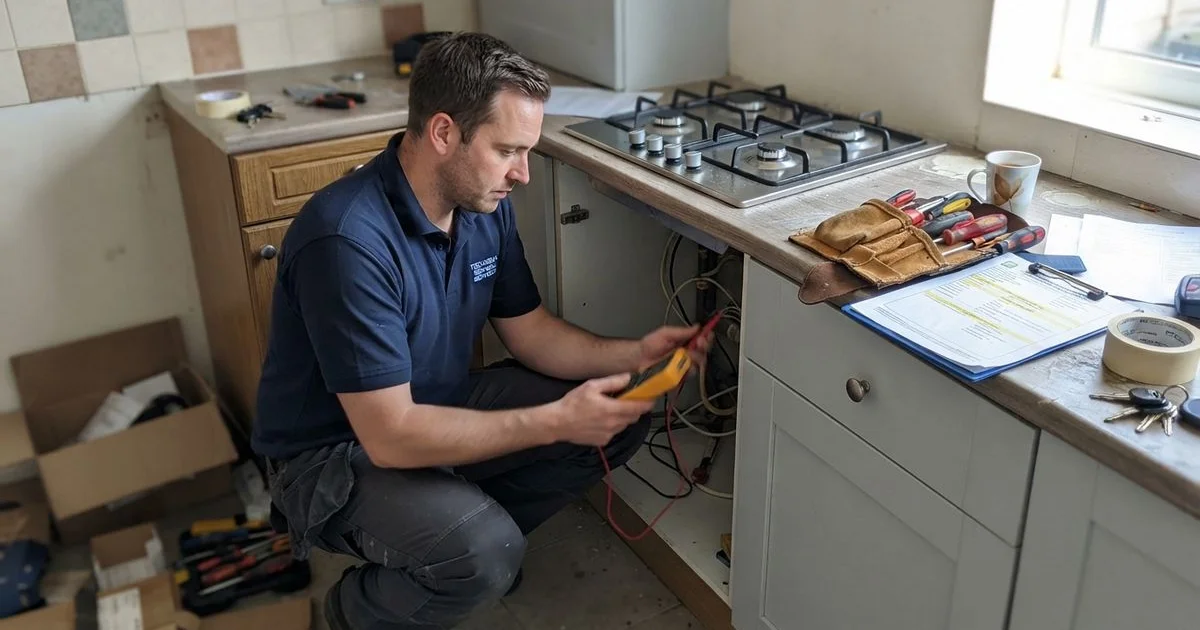
This is general safety information, not professional advice for your specific property: always check current registration and qualifications directly with the individual or company carrying out gas or electrical work, and confirm with building control if you’re unsure whether specific work is notifiable.
A kitchen renovation touches two of the areas where getting it wrong has real safety consequences, gas and electrics, so it’s worth understanding what proper practice looks like before work starts, not after.
Gas work: Gas Safe registration is a legal requirement
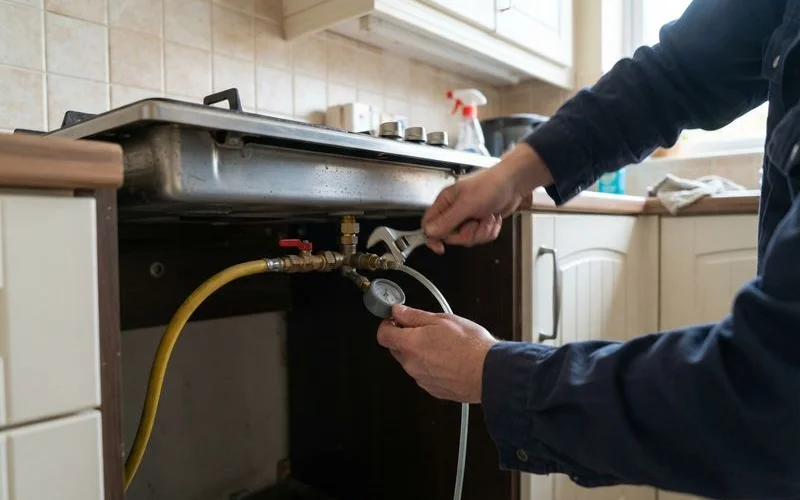
Anyone carrying out work on gas appliances or pipework in Great Britain, moving a gas hob or cooker point during a kitchen renovation, for example, must be Gas Safe registered by law. This isn’t a quality preference, it’s a legal requirement, and it exists because poorly fitted gas work carries genuine risk: leaks and carbon monoxide exposure are the main dangers, and both can be serious.
Before any gas work starts, ask to see the engineer’s Gas Safe ID card, which shows their licence number and confirms exactly which categories of gas work they’re qualified to carry out, not every registered engineer is qualified for every type of job. You can also check registration independently through the official Gas Safe Register.
Electrical work: Part P and what’s notifiable
Part P of the building regulations covers notifiable electrical work in England. Certain kitchen electrical work, particularly installing new circuits, commonly falls under this and should be carried out or certified by someone registered with a competent person scheme, or otherwise checked and signed off by building control. Plenty of straightforward jobs, replacing a socket like-for-like, for instance, don’t require this level of certification, but it’s worth confirming with whoever is doing the work rather than assuming.
| Type of work | Who should do it | Key check |
|---|---|---|
| Moving or connecting a gas hob or cooker point | Gas Safe registered engineer | Ask to see current Gas Safe ID card |
| Installing new electrical circuits | Registered electrician, Part P notifiable | Confirm competent person scheme registration or building control sign-off |
| Like-for-like socket or fitting replacement | Competent tradesperson | Generally not notifiable, but confirm if unsure |
| Appliance connection (non-gas) | Qualified installer per manufacturer instructions | Check manufacturer warranty terms on self-installation |
Why this matters more during a renovation than routine use
Kitchen renovations often disturb existing gas and electrical connections even when the main scope is cosmetic, moving an appliance a short distance still means disconnecting and reconnecting supply. Older Bristol properties are also more likely to have electrical circuits that predate current standards, which is worth factoring in if you’re doing a fuller renovation rather than a straightforward unit swap. Older properties can carry other renovation risks worth checking for too: see our guide on asbestos in older Bristol homes for what to look out for before strip-out begins.
Ventilation and extraction: often overlooked
Gas hobs and some electric cooking appliances need adequate ventilation, and this gets missed more often than the wiring or pipework itself. An extractor fan ducted to the outside, or an adequately specified recirculating hood, is generally expected as part of a compliant kitchen fit, particularly where a gas hob is involved. If your renovation changes the kitchen’s layout significantly, moving the hob to an island, for instance, check early whether ducting an extractor to the outside is even feasible for the new position, since it can affect layout decisions if it isn’t.
Smoke and carbon monoxide detection
A working smoke alarm near the kitchen, and a carbon monoxide alarm if there’s a gas appliance in the room, are both worth confirming as part of any kitchen renovation, even though they’re not strictly part of the fitting work itself. If units or ceilings are being disturbed during the renovation, it’s a natural point to check these are in place and working before the job is signed off, rather than assuming they were dealt with at some earlier point.
What to ask before work starts
Ask whether your fitter handles gas and electrical work in-house with appropriately registered staff, or brings in separate registered tradespeople for it. Either approach is fine, what matters is that whoever does the work holds the right, current registration, and that you receive appropriate certification once it’s complete, a Gas Safe certificate, and Part P certification or a building control completion certificate where relevant. Keep this paperwork; it matters if you sell the property later.
For kitchen plumbing and electrical fit-out specialists working in Bristol, always verify current registration independently rather than taking it on trust, since qualifications can lapse or be misrepresented. Browse the Bristol kitchen fitters directory for local options, and see our scoring methodology for how listed businesses are ranked.
FAQ
- Does a kitchen fitter need to be Gas Safe registered?
- Anyone working on gas appliances or pipework, moving a gas hob or cooker point, must legally be Gas Safe registered in Great Britain. A general kitchen fitter without this registration should not be doing gas work themselves; they should bring in a registered engineer.
- What is Part P and why does it matter for a kitchen renovation?
- Part P covers notifiable electrical work in England. Certain kitchen electrical work, particularly new circuits, falls under it and should be carried out or certified by someone registered with a competent person scheme, or checked separately by building control.
- How do I check if an engineer is Gas Safe registered?
- Ask to see their Gas Safe ID card, which includes their licence number and the specific gas work they're qualified to carry out, and you can check registration details on the official Gas Safe Register if you want independent confirmation.
- What are the risks of unqualified gas or electrical work in a kitchen?
- Gas leaks and carbon monoxide risk from poorly fitted appliances, and fire or shock risk from substandard electrical work, are the core dangers. Both are serious enough that cutting corners here is never worth the saving.