Worktop costs by material: laminate, wood, quartz and granite compared
By Farah Moreau · Updated 2026-07-24
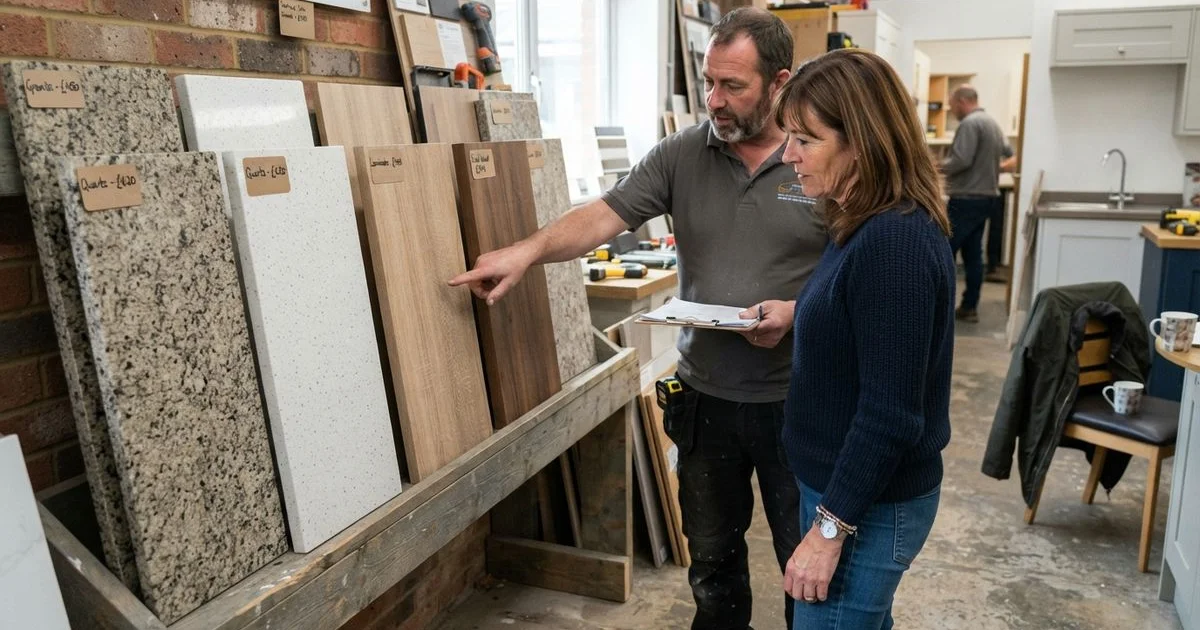
The worktop is one of the most visible surfaces in a kitchen and, materials aside, one of the widest-ranging costs. Picking a material is really a trade-off between upfront price, day-to-day durability, and how much upkeep you’re willing to do. Here’s how the common options compare.
Cost by material
For a typical 4 metre total worktop run, supplied and fitted:
| Material | Estimated cost (4m run) | Maintenance |
|---|---|---|
| Laminate | £500 – £640 | Minimal, wipe clean |
| Solid wood | £900 – £1,160 | Regular oiling needed |
| Quartz/composite stone | £1,620 – £2,060 | Low, occasional clean only |
| Granite | £1,820 – £2,320 | Low, periodic resealing |
These figures scale roughly with length, so a smaller galley kitchen with a 2.5 metre run will cost proportionally less, and a larger kitchen with an island will cost more. Stone worktops also include a templating visit as part of the process, which laminate and solid wood generally don’t need in the same way.
What you’re actually paying for
Laminate is a resin-coated surface bonded to a chipboard core. It’s the most budget-friendly option and comes in a wide range of finishes, some convincingly close to wood or stone at a glance, but it can’t be repaired if it chips or burns, and the edge join is more visible than on other materials.
Solid wood brings a natural look that many buyers want in a period Bristol kitchen, and can be sanded and re-oiled to refresh its appearance over the years. It needs consistent care, though: standing water, hot pans and acidic spills can all mark the surface if it isn’t sealed and maintained.
Quartz is an engineered stone made from crushed quartz bound with resin, giving a more uniform, predictable pattern than natural stone. It’s non-porous, resists staining well, and generally doesn’t need resealing, which is part of why it costs more than granite in some cases despite being manufactured rather than quarried.
Granite is a natural stone, so no two slabs look quite the same, which is part of its appeal. It’s very hard-wearing but, unlike quartz, typically needs resealing every year or two to keep it fully stain-resistant.
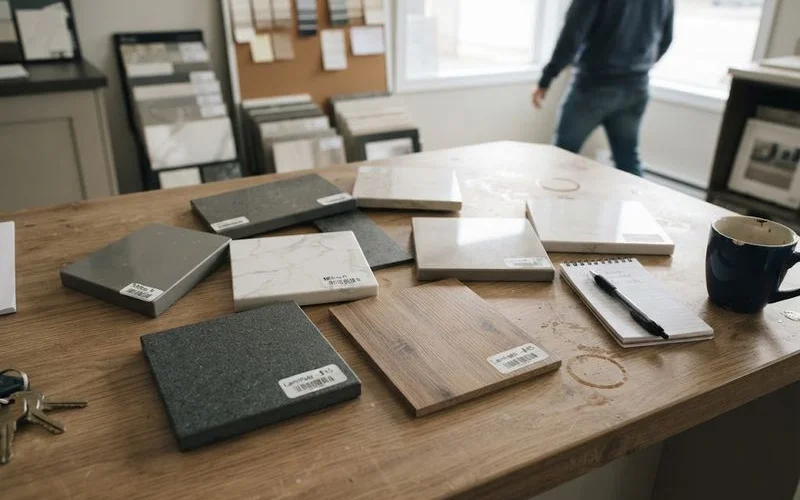
Templating: why stone worktops take longer
Laminate and solid wood worktops can often be cut close to final size before the fitting visit. Stone worktops work differently: a fabricator visits to template, precisely measure and record the shape, angles, and cutout positions, only once your base units are fixed and level. Fabrication then happens off-site, typically adding a week or two before the finished worktop is ready to fit. Factor this into your renovation timeline if you’re choosing quartz or granite, since it’s an extra step laminate and wood skip entirely.
Other factors that move the price within a material
Length isn’t the only thing that changes the total. Cutouts for a sink, hob or drainer grooves add fabrication time and cost on any material, and are more involved on stone than on laminate. Edge profile matters too, a simple square edge costs less to finish than a rounded or bullnose edge on a stone worktop. Upstands and splashbacks in the same material as the worktop, common with quartz and granite so the join is barely visible, are usually priced separately again. None of these show up in a basic per-metre estimate, so ask for them to be itemised if your kitchen has more than a straightforward run.
Choosing between them
If budget is the priority, laminate is hard to beat and modern finishes have closed much of the visual gap with pricier materials. If you want a natural look and don’t mind the upkeep, solid wood suits a period-style Bristol kitchen well. For a busy household that wants durability without ongoing maintenance, quartz is usually the safer long-term choice over granite, though granite’s natural variation appeals to buyers who want no two slabs to look identical. For how worktop choice fits into the total cost of a full kitchen project, see our guide on what a new kitchen costs in Bristol, which breaks down where the rest of the budget goes.
For worktop supply and fitting specialists working in Bristol, ask to see physical samples in your own kitchen’s lighting before deciding, since colour and finish can look different under showroom lights. Browse the Bristol kitchen fitters directory for local options, and see our scoring methodology for how listed businesses are ranked.
FAQ
- What's the cheapest worktop material?
- Laminate, by a clear margin. For a typical 4 metre run it tends to cost roughly £500 to £640 supplied and fitted, compared with £1,620 to £2,060 for quartz and £1,820 to £2,320 for granite over the same length.
- Is quartz or granite better for a kitchen worktop?
- Both are durable, low-maintenance stone surfaces. Quartz is engineered, so colour and pattern are more consistent slab to slab, while granite is a natural stone with more variation and typically needs periodic resealing that quartz doesn't.
- Do solid wood worktops need much maintenance?
- Yes, more than any of the other options here. Solid wood needs regular oiling to stay protected from water and staining, and it's more vulnerable to heat marks and scratches than laminate or stone.
- Why do stone worktops cost more than the material price alone suggests?
- Stone worktops need a separate templating visit after your base units are fixed, so the fabricator can cut the slab to the exact shape of your kitchen, plus a fabrication lead time before fitting. That extra step is built into the higher price.